

Black pepper is one of the most popular spices in the world.
You can find it in almost every kitchen.
However, very few people know where it actually comes from.
Behind every pinch of spice is a powerful tropical vine.
That vine is the pepper black plant.
This plant is more than just an agricultural crop.
It is the foundation of a global industry worth billions of dollars.
In this guide, you will discover how the pepper black plant grows.
You will also learn why it is so valuable in farming, trade, and daily life.
1. What is the pepper black plant?
1.1 Scientific name and classification
The pepper black plant is scientifically known as Piper nigrum.
It belongs to the Piperaceae family.
This plant is a flowering vine.
It grows by climbing on support structures such as poles or trees.
Because of its climbing nature, farmers often train it carefully.
This helps improve both growth and yield.
1.2 Origin and natural habitat
The pepper black plant originates from tropical regions.
It thrives in countries like Vietnam, India, Indonesia, and Brazil.
This plant grows best in warm and humid climates.
It also needs partial shade and well-drained soil.
As a result, Southeast Asia has become a major production hub.
Vietnam, in particular, is now one of the world’s leading exporters.

2. Characteristics of the pepper black plant
2.1 Growth structure (Climbing vine)
The pepper black plant is a perennial climbing vine.
It can grow several meters tall when supported properly.
Farmers usually provide vertical supports such as:
– Wooden poles
– Concrete pillars
– Living trees
This support system helps the plant grow upward.
It also improves air circulation and sunlight exposure.
2.2 Leaves, flowers, and fruits
The plant has distinct features that are easy to recognize:
– Leaves: heart-shaped and deep green
– Flowers: small and arranged in long spikes
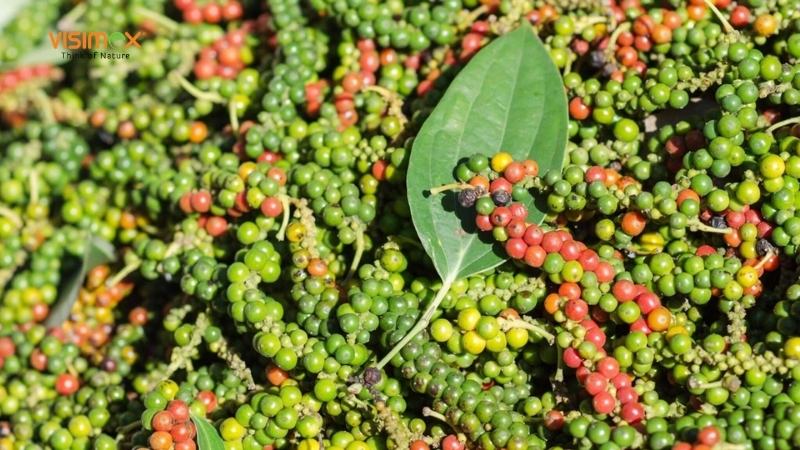
– Fruits: small round berries (peppercorns)
These berries are harvested and processed into black pepper.
Interestingly, the same plant can produce different types of pepper.
The final product depends on how the berries are processed.
3. How the pepper black plant grows
3.1 Ideal climate and soil conditions
The pepper black plant requires specific conditions to grow well.
It thrives in:
– Temperatures between 20–30°C
– High humidity levels
– Well-drained, nutrient-rich soil
In addition, the plant prefers slightly acidic soil.
Proper irrigation is also essential for consistent growth.
3.2 Growth cycle and harvesting time
Growing the pepper black plant takes time and patience.
Here is a simple timeline:
– Year 1–2: Vegetative growth
– Year 3: First fruiting
– Year 4 onward: Full production
Once mature, the plant can produce peppercorns for many years.
Harvesting usually takes place when the berries are still green.
They are then processed to create black pepper.
4. How black pepper is produced from the plant
4.1 Harvesting pepper berries
Farmers harvest the berries when they reach the right maturity.
Timing is important to ensure quality.
The berries are picked in clusters.
They are then separated for processing.
4.2 Processing into black pepper
To produce black pepper, the berries go through a simple process:
– Cleaning
– Boiling (optional)
– Drying under the sun
During drying, the outer skin shrinks and turns black.
This is how black pepper gets its signature look.
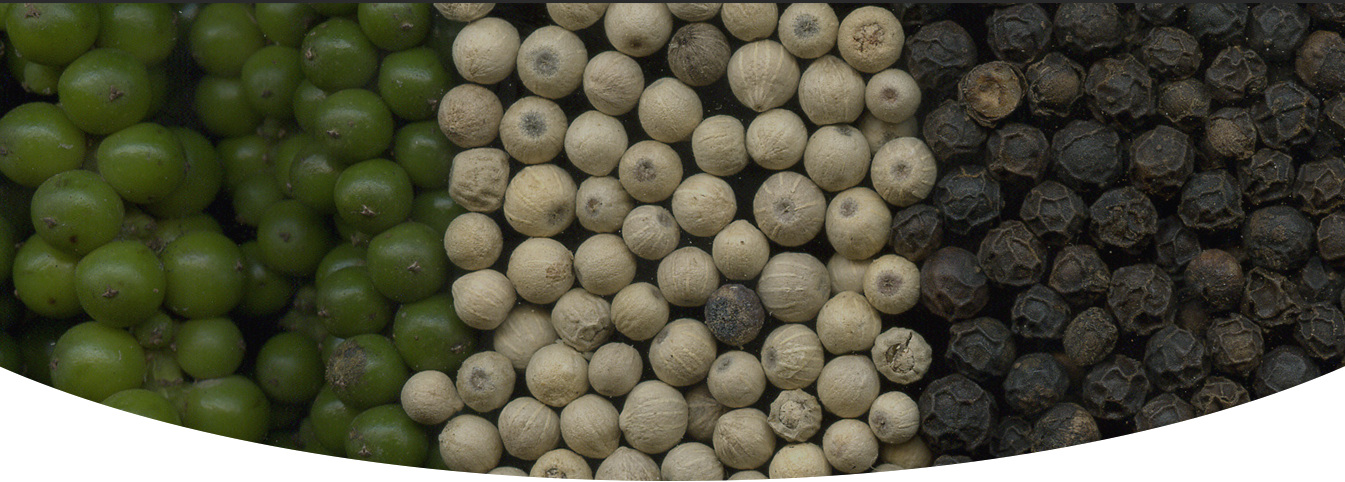
4.3 Other variants: white and green pepper
The same pepper black plant can produce different types of pepper:
– Black pepper: dried unripe berries
– White pepper: ripe berries with outer layer removed
– Green pepper: fresh or preserved unripe berries
Each type has a unique flavor and use.

5. Benefits and uses of the pepper black plant
5.1 Culinary uses worldwide
Black pepper is a universal spice.
It is used in cuisines around the world.
It enhances flavor without overpowering dishes.
That is why it is often called the “king of spices.”
5.2 Medicinal and traditional uses
The pepper black plant has a long history in traditional medicine.
It is believed to:
– Support digestion
– Improve metabolism
– Provide antioxidant effects
In addition, it has been used in herbal remedies for centuries.
5.3 Industrial and commercial uses
Today, the value of the pepper black plant goes beyond cooking.
It is used in:
– Essential oil production
– Food processing
– Cosmetic formulations
– Pharmaceutical products
This wide range of applications increases its global demand.
6. How to grow a pepper black plant
6.1 Step-by-step growing guide
Growing a pepper black plant requires proper planning.
Follow these basic steps:
- Choose healthy planting material
- Prepare well-drained soil
- Provide vertical support
- Water regularly but avoid overwatering
- Add organic fertilizer for better growth
With proper care, the plant can grow successfully.
6.2 Common problems and solutions
Like any crop, the pepper black plant faces challenges.
Common issues include:
– Pests: insects that damage leaves
– Diseases: fungal infections
– Nutrient deficiency: poor growth
To solve these problems:
– Use organic pest control
– Ensure proper drainage
– Monitor soil nutrients regularly
Good farm management can prevent most issues.
7. Global importance of the pepper black plant
7.1 Vietnam’s role in global production
Vietnam plays a key role in the global pepper industry.
It is one of the largest producers and exporters.
The country benefits from ideal growing conditions.
It also has strong farming expertise.
7.2 Economic value and export market
The pepper black plant supports millions of farmers worldwide.
It is a major source of income in many regions.
Global demand remains strong due to its versatility.
As a result, pepper continues to be a valuable export product.
7.3 Sustainability and future trends
Sustainability is becoming more important in agriculture.
Modern farming focuses on:
– Reducing environmental impact
– Improving soil health
– Supporting farmer livelihoods
The future of the pepper black plant depends on sustainable practices.

8. Pepper black plant vs other spice plants
Compared to other spice plants, the pepper black plant offers unique advantages.
It has:
– A climbing growth system
– High economic value
– Wide global demand
Unlike chili or ginger, it is both a spice and an industrial raw material.
This makes it highly valuable in global trade.
9. FAQs about pepper black plant
How long does a pepper black plant take to grow?
It usually takes 3–4 years to produce fruit.
Can it be grown at home?
Yes, if you provide proper support and climate conditions.
What climate is best?
Warm, humid, tropical climates are ideal.
How long does it produce fruit?
A healthy plant can produce for many years.
10. Conclusion
The pepper black plant is more than just a source of spice.
It is a key part of global agriculture and trade.
From tropical farms to kitchens worldwide, its impact is undeniable.
It supports farmers, industries, and economies.
Most importantly, it shows how a simple plant can shape a global market.
Visimex – Pioneering the Journey of Vietnamese Pepper to the World
As a leading pepper exporter in Vietnam, Visimex has partnered with farmers for over 23 years, building a fully integrated supply chain from raw material sourcing to processing. Visimex pepper products meet international certifications including EU Organic, USDA Organic, BRC, and Halal, ensuring the highest standards for global markets.

Beyond exports, Visimex pursues sustainable development, emphasizing social and environmental responsibility, and aims to elevate the value of Vietnamese pepper on the global agricultural map. With the vision “Think of Nature,” Visimex continues to play a pioneering role in bringing Vietnamese agricultural products to the world, strengthening Vietnam’s position in the global spice industry.
Contact Information
- Address: NIC GROUP Building, No. 3A Thi Sach, Hai Ba Trung, Hanoi
- Website: https://Visimex.com
- Email: sales@Visimex.com
- Phone: (+84) 989 255 988 | (+84) 90 456 1155
- LinkedIn: https://www.linkedin.com/company/Visimexcorp