

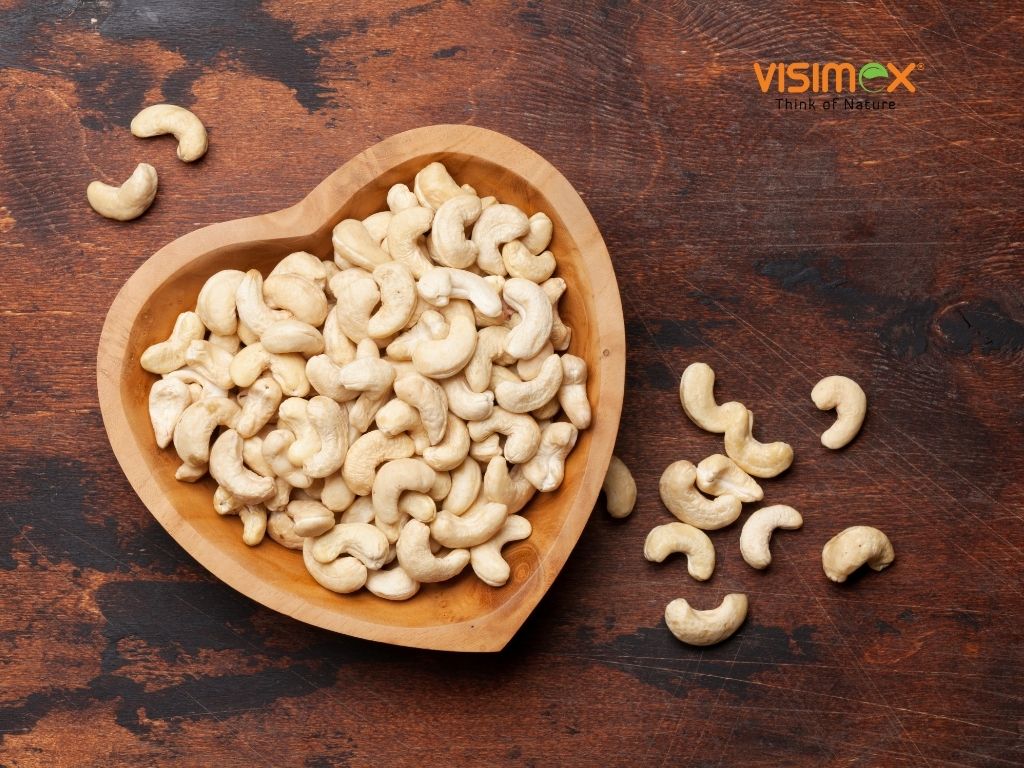
Cashews are often misunderstood because of their fat content, leaving many to ask: do cashews make you fat? In reality, the answer depends less on the nuts themselves and more on how they fit into your overall diet.
To answer that, it’s important to look beyond calories and understand how cashews actually fit into a balanced diet.
1. Understanding Cashews and Their Nutritional Value
1.1. Calories in Cashews (Per Serving)
A standard serving of cashews, about 28 grams or a small handful, contains approximately 150 to 160 calories. At first glance, this number may seem relatively high compared to other snacks.
However, focusing only on calories can be misleading. The impact of a food on your body depends not just on how many calories it contains, but also on the quality of those calories and how your body uses them. Cashews provide energy in a form that is paired with beneficial nutrients, which makes them more valuable than many low-calorie but nutrient-poor alternatives.
1.2. Macronutrients in Cashews
Cashews offer a balanced combination of macronutrients, including healthy fats, plant-based protein, and carbohydrates. This balance is one of the reasons they are considered a satisfying and functional snack.
The presence of protein and fats slows down digestion, helping you feel full for longer. Unlike highly processed snacks that may lead to quick hunger after eating, cashews provide more sustained energy. This makes them a practical option for maintaining stable energy levels throughout the day.
1.3. The Role of Healthy Fats in Your Diet
The fats found in cashews are primarily unsaturated fats, which are widely recognized as beneficial for overall health. These fats play an important role in supporting heart health and maintaining proper body function.
They also assist in the absorption of fat-soluble vitamins such as vitamins A, D, E, and K. In addition, healthy fats contribute to brain function and help regulate energy levels, allowing your body to function more efficiently.
1.4. Why Cashews Are Considered Nutrient-Dense
Cashews are often described as nutrient-dense because they provide a significant amount of nutrients relative to their calorie content. Instead of offering empty calories, they deliver minerals, healthy fats, and protein in each serving.
This means that even a small portion can contribute meaningfully to your daily nutritional needs. As a result, cashews are not just a source of energy but also a source of nourishment.
2. Do Cashews Make You Fat? Here’s What Really Matters
2.1. Weight Gain Depends on Total Calorie Intake
Weight gain occurs when you consistently consume more calories than your body needs over time. It is not caused by a single food, but rather by an overall pattern of eating.

For this reason, asking whether cashews make you fat can be misleading. Cashews alone do not lead to weight gain unless they contribute to a sustained calorie surplus within your diet.
2.2. Why Cashews Are Often Misunderstood
Cashews are frequently misunderstood because of their fat content. Many people associate fat with weight gain, which leads to the assumption that high-fat foods should be avoided.
However, this perspective does not take into account the difference between healthy fats and unhealthy dietary habits. When consumed in reasonable amounts, cashews can be part of a healthy eating pattern rather than a cause for concern.
2.3. Portion Size vs Food Quality
Portion size plays a crucial role in how any food affects your body. Eating a moderate amount of cashews can provide satisfaction and nutritional benefits.
At the same time, the quality of food should not be overlooked. Whole, minimally processed foods like cashews are generally more beneficial than highly processed snacks that contain added sugars, unhealthy fats, and artificial ingredients.
Choosing nutrient-rich foods, even those that are higher in calories, often leads to better long-term outcomes when consumed mindfully.
2.4. The Bigger Picture: Diet and Lifestyle
No single food determines your weight or health. What matters most is the overall pattern of your diet, your daily habits, and your level of physical activity.
Cashews can easily fit into a healthy lifestyle when eaten in moderation and as part of a balanced diet. They can complement meals, provide convenient nutrition, and help maintain energy throughout the day.
Rather than focusing on eliminating specific foods, it is more effective to focus on consistency, balance, and mindful eating habits over time.
3. Why Cashews Can Support Healthy Weight Management
3.1. Satiety: Helping You Feel Full Longer
Cashews contain a combination of healthy fats, protein, and a small amount of fiber, all of which contribute to a stronger feeling of fullness after eating.
When you feel satisfied, you are less likely to reach for additional snacks shortly afterward. This can naturally reduce your overall calorie intake without requiring strict control or restriction.

Instead of creating cycles of hunger and cravings, cashews help promote a more stable and comfortable eating pattern throughout the day.
3.2. Healthy Fats and Energy Balance
The fats in cashews provide a steady and sustained source of energy. Unlike foods that are high in refined carbohydrates, which can cause rapid spikes and drops in blood sugar levels, cashews support a more gradual release of energy.
This stability helps maintain consistent energy levels, making it easier to avoid sudden cravings or fatigue. Over time, this can contribute to more balanced eating habits and better overall control of food intake.
3.3. Preventing Overeating

Including satisfying foods like cashews in your diet can reduce the likelihood of overeating less nutritious options.
When your meals or snacks are nutritionally complete and filling, you are less inclined to seek out highly processed foods that are often easy to overconsume. Replacing those options with whole foods such as cashews can support better portion awareness and more mindful eating behaviors.
This shift does not require drastic changes, but it can gradually improve how you respond to hunger and fullness.
3.4. What Research Says About Nuts and Weight
Research on nut consumption has shown that regularly eating nuts does not automatically lead to weight gain. In many cases, people who include nuts in their diets tend to maintain their weight more effectively.
This may be due to several factors, including increased satiety, improved diet quality, and better overall eating patterns.
These findings suggest that cashews, when consumed in appropriate amounts, can be part of a balanced and sustainable approach to weight management rather than something that needs to be avoided.
==> Read more related topics: Cashew Nuts Benefits for Male
Learn how cashew nuts support men’s health by boosting heart function, energy, and muscle growth, while promoting testosterone levels with essential nutrients like magnesium and zinc.
==> Read more related topics: Cashew Nuts Benefits
Explore the numerous health benefits of cashew nuts, packed with essential nutrients that contribute to heart health, energy, and overall wellness.
==> Read more related topics: Cashew Nuts Benefits for Female
Find out how cashew nuts offer specific health benefits for women, from supporting heart health to boosting energy and skin elasticity, thanks to key nutrients like magnesium, zinc, and healthy fats.
==> Read more related topics: Are Cashews Good for You?
Find out why cashews are a nutritious snack, providing healthy fats, plant-based protein, and essential minerals that support overall health and well-being.
4. How Many Cashews Should You Eat Per Day?
4.1. Recommended Portion Size
A commonly recommended portion of cashews is about 28 grams per day, which is roughly equivalent to a small handful.
This amount provides a good balance between nutritional benefits and calorie intake. It allows you to enjoy the richness and satisfaction of cashews without significantly increasing your daily energy consumption.
4.2. Adjusting Intake Based on Your Goals
The amount of cashews you consume can be adjusted depending on your personal goals.
If you are trying to lose weight, you can still include cashews as long as they fit within your overall calorie range. If your goal is to maintain your current weight, a daily portion can easily become part of a consistent routine.

The key is to view cashews as part of your overall diet rather than as an isolated factor.
4.3. Easy Ways to Control Portions
Managing portion size does not have to be complicated. Simple habits, such as pre-portioning your snacks or placing a serving in a small bowl, can help you stay aware of how much you are eating.
Avoiding eating directly from large packages is another effective strategy, as it reduces the chance of unintentionally consuming more than intended.
These small adjustments support mindful eating without making the experience feel restrictive.
4.4. Enjoying Cashews Without Restriction
There is no need to completely remove cashews from your diet out of concern for weight gain.
When consumed in moderation, they can be enjoyed regularly as part of a balanced lifestyle. Allowing yourself to include satisfying foods like cashews can actually make your eating habits more sustainable over time.
A flexible approach is often more effective than strict limitation.
5. Best Ways to Enjoy Cashews Without Gaining Weight
5.1. Choose Natural, Minimally Processed Cashews
Selecting natural or lightly processed cashews helps you get the most nutritional value without unnecessary additives.

Unsalted or plain varieties are often the best option, as they allow you to enjoy the natural flavor while keeping your intake of sodium and added ingredients low.
5.2. Avoid Highly Processed Options
Flavored or sugar-coated cashews may be appealing, but they often contain added sugars, oils, or artificial ingredients that increase calorie content without providing additional nutritional benefits.
Choosing simpler, less processed options helps you maintain better control over what you are consuming.
5.3. Pair Cashews with Balanced Meals
Cashews can be easily incorporated into a variety of meals. Adding them to salads, yogurt, or oatmeal can enhance both flavor and nutritional value.
When combined with other whole foods, cashews contribute to a more balanced and satisfying meal, which can help reduce the need for additional snacking later.
5.4. Practice Mindful Eating
Paying attention to how and when you eat plays an important role in managing your overall intake.
Eating slowly, noticing hunger cues, and avoiding distractions during meals can help you better regulate portion size. When enjoyed mindfully, cashews become a controlled and satisfying part of your daily routine rather than something that leads to overconsumption.
6. Conclusion: Do Cashews Make You Fat?
So, do cashews make you fat? The answer is no when they are enjoyed in moderation. Rather than being a food to avoid, cashews can be a valuable part of a healthy and balanced diet thanks to their rich nutrient profile and ability to promote satiety.
Instead of focusing on restriction, it is more effective to build sustainable eating habits based on balance, portion awareness, and overall diet quality. When consumed mindfully, cashews not only provide energy but also help support more consistent and satisfying eating patterns.
For those looking to incorporate high-quality cashews into their daily routine, choosing a reliable source is equally important. With its strong background in agricultural production and export, Visimex focuses on carefully selected raw materials and controlled processing to preserve the natural taste and nutritional value of cashews. This ensures a product that aligns well with modern, health-conscious lifestyles.
Ultimately, cashews are not something to fear. When chosen wisely and consumed in the right way, they can become a nutritious, enjoyable snack that supports your long-term wellness.

+Address: NIC GROUP Building, No. 3A Thi Sach, Hai Ba Trung, Hanoi
+Website: https://visimex.com
+Phone: (+84) 989 255 988 | (+84) 90 456 1155
+LinkedIn: https://www.linkedin.com/company/visimexcorp

![[ALL] Cashew Nuts Benefits: Nutrition Facts, Storage Tips & Best Time to Eat](https://visimex.com/wp-content/uploads/2025/10/Visimex-WEBSITE-5.jpg)


![[ALL] Cashew Nuts Benefits: Nutrition Facts, Storage Tips & Best Time to Eat](https://visimex.com/wp-content/uploads/2025/10/Visimex-WEBSITE-5-100x100.jpg)