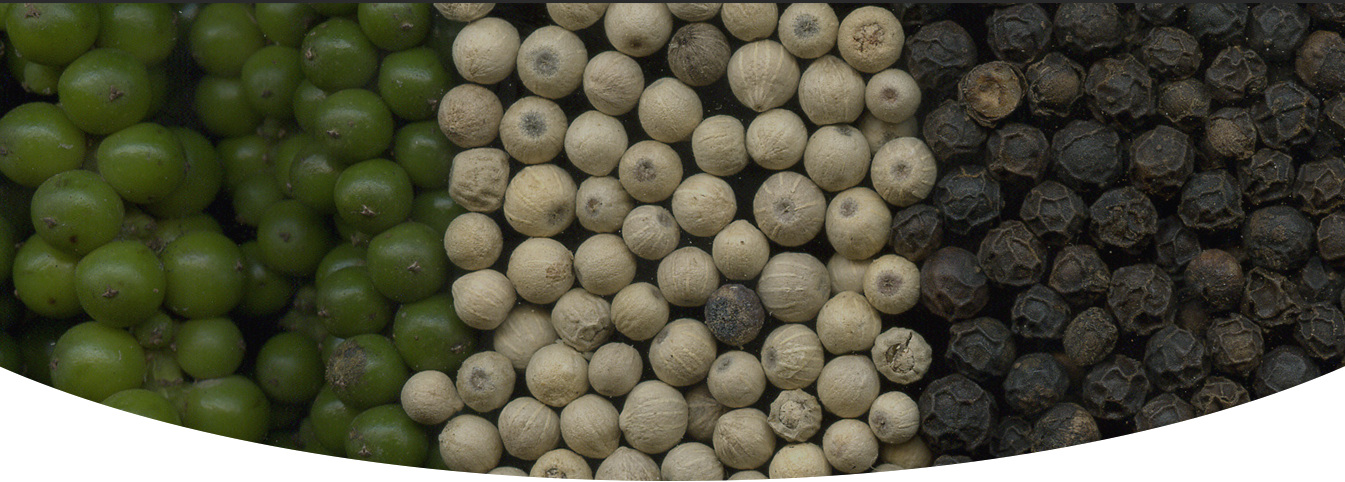


In the global spice industry, pepper is not only a widely used seasoning but also a strategic agricultural commodity with high commercial value and strict quality requirements. Among pepper products, white pepper and black pepper are the two main commercial categories. Although they originate from the same pepper plant, they differ significantly in processing methods, sensory characteristics, applications, and export value.
Understanding the white pepper and black pepper difference helps consumers use spices more effectively in culinary applications and plays a critical role for spice processing and exporting businesses, as each market and customer segment has distinct standards and expectations.

1. Overview of White Pepper and Black Pepper
1.1. What Is Black Pepper?
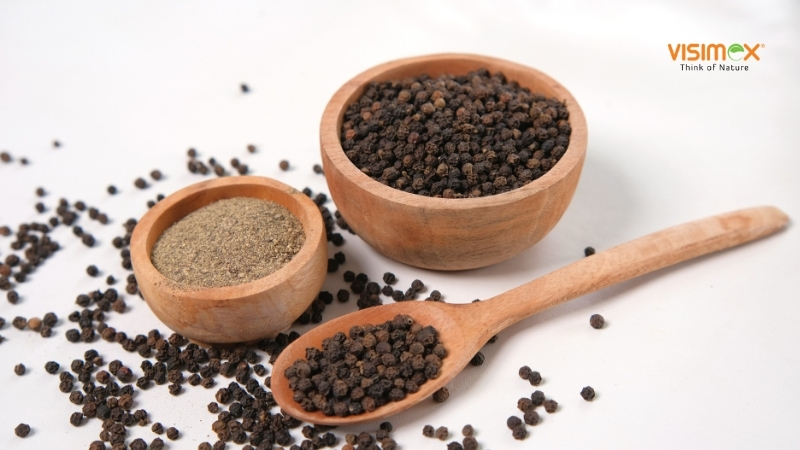
Black pepper is the most widely consumed type of pepper globally and accounts for a large share of total pepper export volume. It is harvested when the pepper berries are still green or just beginning to ripen, then sun-dried or mechanically dried without removing the outer skin.
During drying, the outer layer shrinks and darkens, forming the characteristic black-brown, wrinkled appearance and strong aroma. Thanks to its bold flavor, versatility, and cost efficiency, black pepper remains a popular choice for both domestic consumption and mass export markets.
1.2. What Is White Pepper?
White pepper is produced from fully ripe red pepper berries. After harvesting, the berries are soaked in water for an extended period to soften the outer skin, which is then removed. Only the inner core is retained, thoroughly cleaned, and dried.
White pepper processing requires strict control over hygiene, timing, and technical conditions to ensure uniform off-white color, neutral aroma, and compliance with international food safety standards. As a result, white pepper typically commands a higher market value and is favored in premium and demanding markets.

2. White Pepper and Black Pepper Difference
2.1. Difference in Processing Methods
The most fundamental white pepper and black pepper difference lies in post-harvest processing:
+ Black pepper: early harvest → direct drying → skin retained
+ White pepper: fully ripe harvest → soaking → skin removal → cleaning → drying
Removing the outer skin significantly alters the flavor profile, appearance, and applications of white pepper compared to black pepper.
2.2. Difference in Color and Appearance
+ Black pepper: dark brown to black color, wrinkled surface, less uniform shape
+ White pepper: off-white to light gray color, smoother surface, more uniform shape
In food processing, color is a critical factor – especially for premium products or formulations where visual consistency matters.
2.3. Difference in Flavor and Pungency
+ Black pepper delivers a strong aroma and immediate pungent heat.
+ White pepper offers deeper, longer-lasting heat with a milder, more refined aroma.
This difference is due to the presence of aromatic essential oils in the outer skin of black pepper, while white pepper emphasizes the pungency of piperine.
==> Read more related topics: White Pepper Benefits
Explore how white pepper supports digestion, boosts metabolism, and provides anti-inflammatory benefits that contribute to overall health and wellness.==> Read more related topics:White Pepper Benefits for Female
Discover how white pepper supports women’s health by improving digestion, boosting metabolism, and providing antioxidants that promote skin health and overall well-being.==> Read more related topics: White Pepper Benefits for Male
Discover how white pepper supports men’s health by boosting metabolism, improving digestion, and providing antioxidants that enhance overall vitality and wellness.
2.4. Difference in Sensory Characteristics
Black pepper is valued for its pronounced fragrance, whereas white pepper provides a “cleaner” heat with fewer secondary aromas. For this reason, white pepper is often preferred in formulations requiring subtle and balanced flavor profiles.
3. White Pepper vs. Black Pepper in Culinary Applications
3.1. Applications of Black Pepper
Black pepper is commonly used in:
+ Grilled, stir-fried, and braised dishes
+ Processed and ready-to-eat foods
+ Base seasoning in many traditional cuisines
Its bold aroma helps define the overall flavor profile of dishes.
3.2. Applications of White Pepper
White pepper is frequently used in:
+ European cuisine
+ Soups, sauces, and purees
+ Processed foods requiring a light or uniform color
White pepper preserves the natural appearance of dishes while adding refined spiciness without overpowering other flavors.

4. Which Should You Choose: White Pepper or Black Pepper?
4.1. When to Use Black Pepper
+ When a strong aroma is required
+ For rich, robust dishes
+ Suitable for mass-market and mid-range products
4.2. When to Use White Pepper
+ When visual appearance is important
+ For delicate and refined dishes
+ Ideal for premium products and export-oriented applications
5. Quick Comparison: White Pepper and Black Pepper
| Criteria | Black Pepper | White Pepper |
| Color | Black, dark brown | Off-white |
| Processing | Direct drying | Soaking, skin removal |
| Flavor | Strong aroma, sharp heat | Deep heat, mild aroma |
| Applications | Robust dishes | Premium dishes |
| Commercial value | Widely traded | Higher value |
6. Common Misconceptions About White and Black Pepper
6.1. White Pepper Is Not Bleached Black Pepper
White pepper and black pepper are fundamentally different products based on processing methods – not chemical treatment.
6.2. White Pepper Is Not Less Spicy
White pepper often delivers deeper and more persistent heat; the difference lies mainly in aroma.
6.3. White Pepper and Black Pepper Are Not Fully Interchangeable
Each type serves specific culinary and industrial purposes and should be selected accordingly.
7. Perspective from the Global Spice Export Industry
7.1. Export Standards for White and Black Pepper
In international trade, pepper is evaluated based on cleanliness, moisture content, foreign matter, microbiological criteria, and traceability. Due to its more complex processing, white pepper is subject to stricter quality and safety requirements.
7.2. Product Positioning by Market and B2B Segments
For exporters like VISIMEX, developing both white pepper and black pepper product lines allows them to meet diverse market demands while demonstrating end-to-end quality control – from raw material sourcing to advanced processing. White pepper is typically positioned in premium markets such as the EU, the United States, and Japan, while black pepper remains the volume-driven core export product.

8. Conclusion
The white pepper and black pepper difference goes far beyond color. It encompasses processing techniques, flavor profiles, applications, and commercial positioning. Understanding these differences enables both businesses and consumers to optimize product quality, enhance added value, and meet precise market requirements.
As the global spice industry continues to standardize and intensify competition, correctly distinguishing between white pepper and black pepper is a key foundation for sustainable growth.
VISIMEX – A Leading Spice Exporter in Vietnam
With over 23 years of experience in the agricultural sector, VISIMEX is one of Vietnam’s pioneering and leading spice exporters. From black pepper and white pepper to cinnamon, star anise, and other key agricultural products, VISIMEX has built a fully integrated supply chain – from certified raw material sourcing to advanced processing and global distribution.

VISIMEX products comply with strict international standards including EU Organic, USDA Organic, BRC, and Halal certifications, ensuring premium quality, food safety, and full traceability. Guided by its sustainable development strategy and the philosophy “Think of Nature,” VISIMEX continuously enhances the global value of Vietnamese spices, reinforcing Vietnam’s position as one of the world’s leading spice supply hubs.
Contact Information:
+Address: NIC GROUP Building, No. 3A Thi Sach, Hai Ba Trung, Hanoi
+Website: https://Visimex.com
+Email: sales@Visimex.com
+Phone: (+84) 989 255 988 | (+84) 90 456 1155
+LinkedIn: https://www.linkedin.com/company/Visimexcorp